



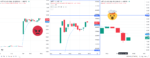

How to Trade Nifty Zero DTE Options Without Wiping Out Your Capital

How to Trade Nifty Zero DTE Options Without Wiping Out Your Capital
Zero DTE options can be exciting. The market moves quickly, option premiums can rise sharply within minutes, and traders often see opportunities that look too good to ignore.
But there is another side to expiry-day trading.
A small mistake in timing, position size, or risk management can wipe out a significant part of your trading capital. This is why learning how to trade Nifty Zero DTE options safely is more important than simply finding the next big move.
In this guide, we will look at a practical approach to trading Nifty options on expiry day while keeping capital protection as the first priority.
Disclaimer: This article is for educational purposes only and should not be considered investment or trading advice. Options trading involves substantial risk, and losses can exceed your expectations.
What Are Zero DTE Options?
DTE means Days to Expiry. A Zero DTE option is an option contract that expires on the same day.
For Nifty option traders, expiry-day contracts can be extremely volatile because time value falls rapidly as expiry approaches. This process is known as theta decay.
The closer the option gets to expiry, the faster its time value can disappear.
That creates both opportunity and risk.
A trader may correctly predict the market direction but still lose money if:
- The move happens too late.
- The market stays sideways.
- The option premium has already lost significant time value.
- The trader buys an expensive premium after a sharp move.
This is why Zero DTE trading requires a different mindset from normal swing trading.
The Biggest Mistake: Trading Too Much Size
Many traders lose money on expiry day because they focus on the potential profit instead of the possible loss.
For example, imagine a trader has a small account and puts a large percentage of it into one Nifty option trade. If the market moves against the position for just a few minutes, the premium can fall quickly.
The first rule of Zero DTE trading is simple:
Your position size should be small enough that one losing trade does not damage your ability to trade tomorrow.
Before entering a trade, decide:
- How much money you are willing to lose.
- Where your trade idea becomes invalid.
- How many lots you can trade based on that risk.
Never increase your position size simply because you want to recover an earlier loss.
Wait for the Market to Show Its Direction
Expiry-day trading often begins with fast and unpredictable price action.
The opening candles can create excitement, but they can also create false breakouts and sudden reversals.
Instead of immediately buying a Call or Put, wait for the market to provide information.
Useful things to watch include:
- Important support and resistance levels.
- The opening range.
- Price behaviour around the previous day’s high and low.
- Volume during a breakout.
- Whether the index is holding above or below a key level.
The goal is not to catch every point.
The goal is to trade when the market gives you a clearer setup.
Missing a trade is usually cheaper than entering a bad one.
Avoid Chasing a Big Green Candle
One of the most common expiry-day mistakes is buying an option after a large move has already happened.
Imagine Nifty suddenly moves strongly upward and the Call option premium jumps from ₹80 to ₹140. A trader who sees the big green candles may feel pressure to enter immediately.
But this is often where risk increases.
The option premium may already include a large part of the move. If Nifty pauses or pulls back, the option buyer can quickly see the premium fall.
Instead of chasing:
- Wait for a pullback or consolidation.
- Check whether the important price level is holding.
- Define your stop-loss before entering.
- Avoid buying simply because you are afraid of missing out.
FOMO is not a trading strategy.
Understand Theta Decay Before Buying Options
On Zero DTE contracts, time is working against option buyers.
As expiry gets closer, an option can lose value even when the index is not moving significantly.
This means a trader cannot simply buy a Call or Put and wait forever for the market to move.
Before buying an option, ask yourself:
Does the market have enough momentum to move before time decay eats into the premium?
If Nifty is moving sideways, buying options can become particularly risky. In such conditions, both Call and Put premiums may lose value over time.
This is why timing matters so much on expiry day.
Always Know Your Exit Before You Enter
A good trade is not only about finding the right entry. It is also about knowing what you will do if you are wrong.
Before entering a Zero DTE trade, decide:
- Your entry level.
- Your stop-loss.
- Your profit target or exit plan.
- The maximum amount you can lose.
Do not change your stop-loss simply because you do not want to accept a loss.
Small, controlled losses are a normal part of trading.
A small loss becomes dangerous only when a trader refuses to exit and turns one bad trade into a major problem.
Do Not Try to Recover Every Loss
Expiry-day volatility can create a dangerous emotional cycle.
A trader loses money on one Put trade. Then, instead of taking a break, they immediately buy a Call with a larger position. That trade also goes wrong.
Soon, the focus is no longer on the market.
The focus becomes recovering the money.
This is called revenge trading, and it can be especially damaging with Zero DTE options.
A simple rule can help:
Set a maximum daily loss and stop trading when you reach it.
There will always be another trading day. Protecting your capital gives you the opportunity to participate in future setups.
A Simple Zero DTE Trading Checklist
Before taking a Nifty expiry-day trade, ask yourself:
- Is there a clear market setup?
- Am I entering near an important price level?
- Am I chasing a move that has already happened?
- Do I know my maximum loss?
- Is my position size appropriate for my account?
- Do I have a clear stop-loss?
- Am I trading because of a setup or because of FOMO?
If you cannot answer these questions clearly, it may be better to wait.
Final Thoughts
Nifty Zero DTE options can offer fast opportunities, but speed does not guarantee easy profits.
The traders who survive for the long term are often not the ones who catch every big move. They are the ones who know when to stay out, control their position size, and accept a small loss when their idea is wrong.
On expiry day, capital protection should come before profit.
You do not need to win every trade. You need to make sure that one bad trade does not take you out of the game.
Trade less when the market is unclear. Trade smaller when volatility is high. And always protect the capital that gives you the opportunity to trade again tomorrow.