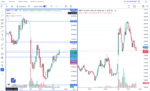
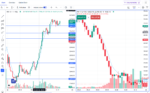
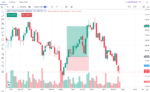

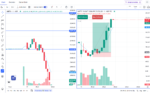
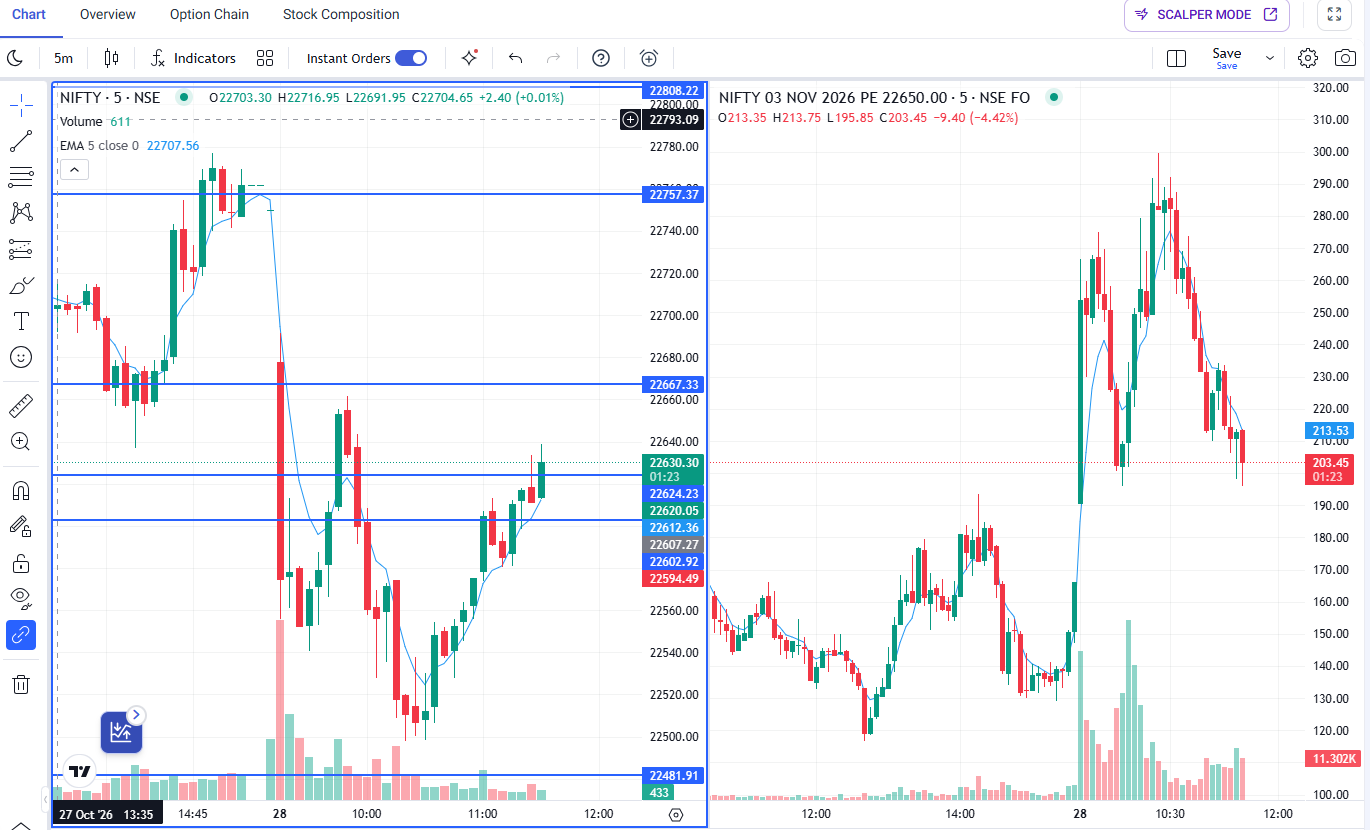
The Day After Expiry: 28 October 2026 Gap Down That Caught Everyone Off Guard

The Indian stock market opened sharply lower on Wednesday, 28 October 2026, giving traders a reminder that the market can change direction even after a relatively quiet trading session. After NIFTY 50 closed almost flat on Tuesday, the benchmark index opened lower the following morning, putting renewed pressure on traders who were expecting stability or a recovery.
The move was especially important for intraday traders and options buyers. A gap-down opening can change the market setup before regular trading begins, leaving traders with little time to adjust positions based on the new price levels.
But what caused the weakness, why did the day after expiry matter, and what lessons can traders take from this move?
In this article, we examine the market context, the possible impact on NIFTY options, and the risk-management lessons traders should understand before trading after an expiry session.
NIFTY’s Previous Session: A Calm Close Before a Weak Opening
On Tuesday, 27 October 2026, the NIFTY 50 closed at 22,749.75, down just 3.45 points, or approximately 0.02%. The closing movement was small, making the session appear relatively range-bound. <Cite refs={[“turn422835news14″,”turn422835search2”]}/>
However, a quiet close does not guarantee a quiet opening the next day. Global markets, crude oil prices, currency movements, overseas futures, and overnight developments can all influence the next session’s opening price.
That is what made Wednesday’s opening important. NIFTY did not begin near the previous closing level; instead, it opened significantly lower.
According to market reports, NIFTY 50 opened at approximately 22,616.40, down 133.35 points, or around 0.59%, from the previous close. <Cite refs={[“turn422835search2″]}/>
<text color=”secondary” size=”sm”>These figures refer to the reported opening snapshot. Intraday prices changed as the session progressed.</text>
What Is a Gap-Down Opening?
A gap down occurs when a market opens below the previous trading session’s closing price.
For example, if an index closes at 22,750 and opens the following day at 22,620, it starts trading 130 points below the previous close.
A gap down can occur because market participants react to new information while the market is closed. When trading resumes, buy and sell orders reflect updated expectations, and the opening price may be substantially different from the previous close.
A gap down does not automatically mean that the market will continue falling. Sometimes the index recovers after the opening; in other cases, selling pressure continues throughout the session.
The key is to observe how price behaves after the opening rather than assuming the first move determines the entire day’s direction.
Why Did the Market Open Lower on 28 October?
Several factors were influencing market sentiment around the session.
1. Rising Crude Oil Prices
Elevated crude oil prices were an important concern for Indian markets. India imports a large share of its crude oil requirements, so a sustained increase in oil prices can raise concerns about inflation, import costs, and pressure on the country’s external balance.
Reuters reported that Brent crude was trading near $116 per barrel on 27 October amid Middle East tensions and concerns about supply disruptions. <Cite refs={[“turn422835news14″,”turn422835news15”]}/>
Higher oil prices can affect sentiment toward Indian equities, although their impact on the market depends on several other factors as well.
2. Weak Signals From GIFT NIFTY
GIFT NIFTY futures were indicating a weaker start before the Indian cash market opened. Reports on the morning of 28 October pointed to a negative opening outlook, with crude oil prices among the concerns weighing on sentiment. <Cite refs={[“turn422835search0″,”turn422835search9”]}/>
GIFT NIFTY is a useful indicator, but it is not a guarantee of the exact NIFTY cash-market opening price. Traders should compare the futures indication with the actual opening once regular trading begins.
3. Global Uncertainty and the Federal Reserve
Investors were also monitoring the upcoming US Federal Reserve decision and developments in the Middle East. Uncertainty around interest rates, energy prices, and global financial conditions can influence international investor sentiment.
These factors formed part of the broader market backdrop, but no single factor should be treated as the confirmed cause of the entire gap-down move.
Why the Day After Expiry Matters for Options Traders
Expiry sessions can be highly volatile, particularly for traders holding short-dated options. But the next trading day introduces a different set of considerations.
Once a contract expires, that contract no longer trades. Traders who want to continue trading options must assess the available contracts and their respective expiry dates.
A gap down on the following session can create fresh opportunities, but it can also catch traders off guard if they carry positions in a different expiry or enter the market based on the previous day’s price action.
The important lesson is that expiry-day price action should not be treated as a reliable forecast for the next session.
Traders should reassess the market using the latest index levels, support and resistance zones, volatility, and the price action after the new session opens.
How a Gap Down Can Affect NIFTY PE and CE Options
A gap down can affect call and put options differently.
Impact on Put Options (PE)
A put option generally gains value when the underlying index falls, all else being equal. Therefore, a gap down may benefit put-option buyers who already hold an appropriate position.
However, the premium does not depend on direction alone. Strike price, implied volatility, time remaining, liquidity, and the size of the index move all influence the result.
A trader buying a PE after the market has already opened lower may also face the risk of entering too late. If the index rebounds, the option premium can decline quickly.
Impact on Call Options (CE)
Call options generally face downward pressure when the underlying index falls, assuming other pricing factors remain unchanged.
Traders holding calls from the previous session may find that the opening gap reduces their position’s value. The actual loss depends on the contract, premium paid, expiry, and changes in volatility.
Buying a CE immediately after a gap down can also be risky if the trader assumes the market must recover. A gap does not guarantee a reversal.
The Biggest Mistake: Assuming the Gap Will Continue
One common intraday trading mistake is treating a gap-down opening as a signal to keep selling without waiting for confirmation.
The market may continue downward, but it may also recover sharply if buyers enter near important price levels or selling pressure weakens.
Instead of making a decision based on the opening gap alone, traders can monitor:
- Opening range: Observe the first part of the session and identify the initial high and low.
- Support and resistance: Mark relevant levels from previous sessions and the current day’s price action.
- Price confirmation: Look for a clear breakdown, recovery, or rejection rather than anticipating the move.
- Volume and volatility: Consider whether the price movement is accompanied by meaningful participation and changing risk.
- Risk-to-reward: Check whether the potential reward justifies the risk before entering.
No single indicator can predict every market reversal. These checks are intended to support a disciplined process, not to guarantee a profitable trade.
Lessons Traders Can Learn From the 28 October Gap Down
1. Never Depend on the Previous Close Alone
A nearly flat close does not mean the next session will open near the same level. Overnight developments can change the market’s outlook before trading resumes.
2. Avoid Blind Option Buying
Buying a PE simply because NIFTY has opened lower can expose a trader to a reversal. Similarly, buying calls only because the market looks oversold can be dangerous.
Wait for a setup that matches your trading plan.
3. Control Position Size
Gap openings can produce fast price changes and wider spreads in some options. Smaller, carefully planned positions can help prevent a single trade from creating an excessive loss.
4. Use a Predefined Exit Plan
Decide what would invalidate the trade before entering. A stop-loss can help control risk, although it cannot guarantee execution at the chosen price during fast markets.
5. Avoid Revenge Trading
If an overnight position opens at a loss, the urge to recover the money immediately can lead to poor decisions. Reassess the market calmly instead of increasing risk to recover a previous loss.
6. Keep Overnight Risk in Mind
A position held overnight is exposed to developments that occur while the market is closed. A stop-loss may not prevent a larger-than-expected loss if the market opens beyond the chosen level.
Traders should consider this risk before deciding whether to carry an options position overnight.
What Should Traders Watch After a Gap Down?
After a weak opening, traders should focus on how NIFTY behaves around relevant intraday levels rather than making an immediate prediction.
If the index holds below the opening range and selling pressure continues, the bearish move may remain in place. If the index recovers above important levels and buying participation improves, the initial weakness may be fading.
These are conditional observations, not fixed trading signals. The correct interpretation depends on the actual chart, market conditions, and the trader’s timeframe.
For options traders, it is equally important to monitor the specific contract’s premium and liquidity. A correct view of the index does not always translate into a profitable options trade.
Final Thoughts
The 28 October 2026 session showed how quickly the market’s outlook can change. After NIFTY 50 closed almost unchanged at 22,749.75 on Tuesday, it opened around 22,616.40 on Wednesday—a reported decline of 133.35 points from the previous close. <Cite refs={[“turn422835search2”]}/>
The move highlights why traders should avoid relying entirely on the previous session’s trend or assuming that expiry-day behaviour will continue into the next trading day.
For intraday and options traders, the better approach is to reassess the market after the opening, wait for price confirmation, manage position size, and define risk before entering a trade.
The market does not owe traders a continuation or a reversal. Preparation, patience, and risk management are more reliable than trying to predict every move.
Disclaimer: This article is for educational and informational purposes only and is not investment advice or a recommendation to buy or sell any security or derivative. Options trading involves substantial risk and may result in the loss of the entire premium paid. Market figures are based on published reports and should be checked against official exchange data before being used for trading decisions.