


RBI’s 3-Pronged War on Inflation: How India’s Central Bank Is Fighting Rising Prices

Introduction
Inflation affects everything from grocery bills and fuel prices to loan EMIs and business costs. When prices rise too quickly, households lose purchasing power and businesses face greater uncertainty.
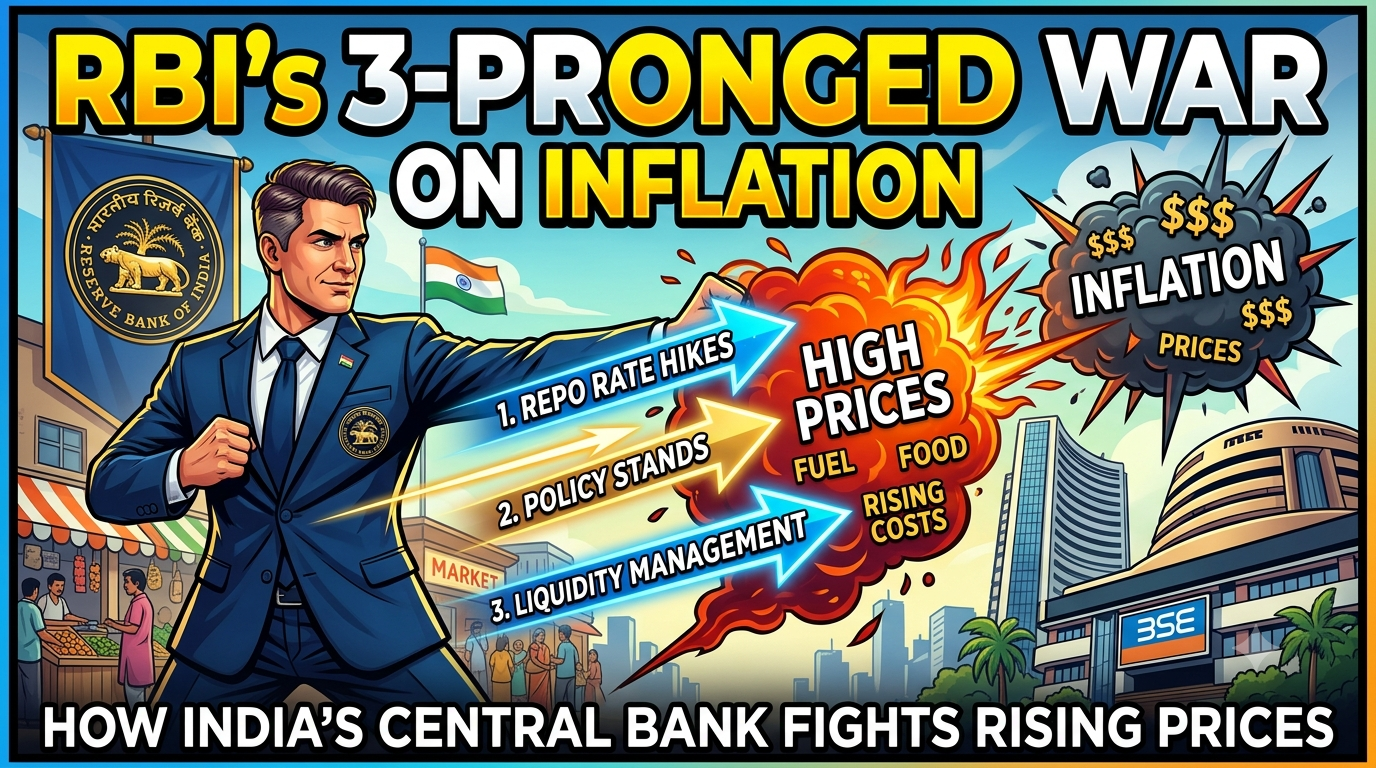
The Reserve Bank of India (RBI) is responding with a three-pronged approach: raising interest rates, supporting the Indian rupee and managing liquidity in the banking system. These measures aim to contain inflation while maintaining economic stability. <Link url=”https://thedailybrief.zerodha.com/p/the-rbis-3-front-war-on-inflation” title=”Source: The Daily Brief by Zerodha”/>
1. Raising Interest Rates to Control Inflation
One of the RBI’s main tools is the repo rate, which influences borrowing costs throughout the economy.
In October 2026, the RBI raised its benchmark repo rate by 25 basis points to 5.50%, marking its first rate increase in nearly four years. The move came amid renewed inflationary pressure. <Link url=”https://www.reuters.com/world/india/indias-september-retail-inflation-554-on-year-2026-10-12/” title=”Source: Reuters”/>
Higher interest rates can make loans more expensive for households and businesses. This may moderate borrowing and spending, helping reduce demand-driven price pressures over time.
However, interest rate increases cannot immediately solve supply shortages or reduce the cost of food and fuel.
2. Supporting the Indian Rupee
A weaker rupee can make imported goods, crude oil and other essential inputs more expensive. These higher costs can eventually affect transport, manufacturing and consumer prices.
To address currency pressure, the RBI introduced measures including a dedicated dollar facility for state-run oil companies. The objective is to reduce their direct demand for dollars in the spot foreign exchange market and ease pressure on the rupee. <Link url=”https://www.reuters.com/world/india/india-importers-press-rupee-hedges-despite-rbis-higher-cost-deterrent-2026-10-14/” title=”Source: Reuters”/>
A more stable currency can help limit imported inflation, although exchange rates are also influenced by global oil prices, capital flows and international economic conditions.
3. Managing Liquidity in the Banking System
The third front is liquidity management.
Liquidity refers to the availability of funds within the financial system. If excess liquidity keeps short-term borrowing costs below the desired policy level, interest rate changes may not fully reach businesses and consumers.
The RBI has tightened liquidity conditions through measures affecting banks’ cash requirements and money-market funding. These steps help policy rates transmit more effectively through the financial system.
The aim is to ensure that changes in monetary policy influence actual borrowing costs and financial conditions, rather than remaining only a headline repo-rate adjustment.
Why Is the RBI Fighting Inflation on Three Fronts?
India’s retail inflation increased to 5.54% in September 2026, up from 4.83% in August, while food inflation reached 7.74%. Rising food prices and higher energy costs have added to inflationary pressure. <Link url=”https://www.reuters.com/world/india/indias-september-retail-inflation-554-on-year-2026-10-12/” title=”Source: Reuters”/>
These pressures cannot always be controlled with one policy instrument. Interest rates influence demand, currency measures address external pressure, and liquidity management supports the transmission of monetary policy.
Together, the three approaches give the central bank more ways to address different sources of financial instability.
What Does This Mean for Ordinary Indians?
The RBI’s actions may affect everyday finances in several ways:
- Borrowers: Higher policy rates can eventually increase borrowing costs, depending on loan terms and lender decisions.
- Savers: Deposit rates may change as banks respond to shifting interest rates.
- Businesses: Higher financing costs can affect investment, production and expansion plans.
- Consumers: Currency stability and lower inflation pressure may help moderate the cost of imported goods and other products over time.
The impact will not be immediate or identical for everyone. Much depends on how inflation, global energy prices and economic activity develop.
Conclusion
The RBI’s three-pronged inflation strategy combines interest rate increases, measures to support the rupee and tighter liquidity management. Each addresses a different part of the problem, from domestic borrowing conditions to imported costs and financial-system liquidity.
The challenge is to bring inflation under control without unnecessarily weakening economic growth. Whether these measures succeed will depend on future price trends, supply conditions and the broader global environment.
Disclaimer: This article is for informational purposes only and does not constitute financial or investment advice.