


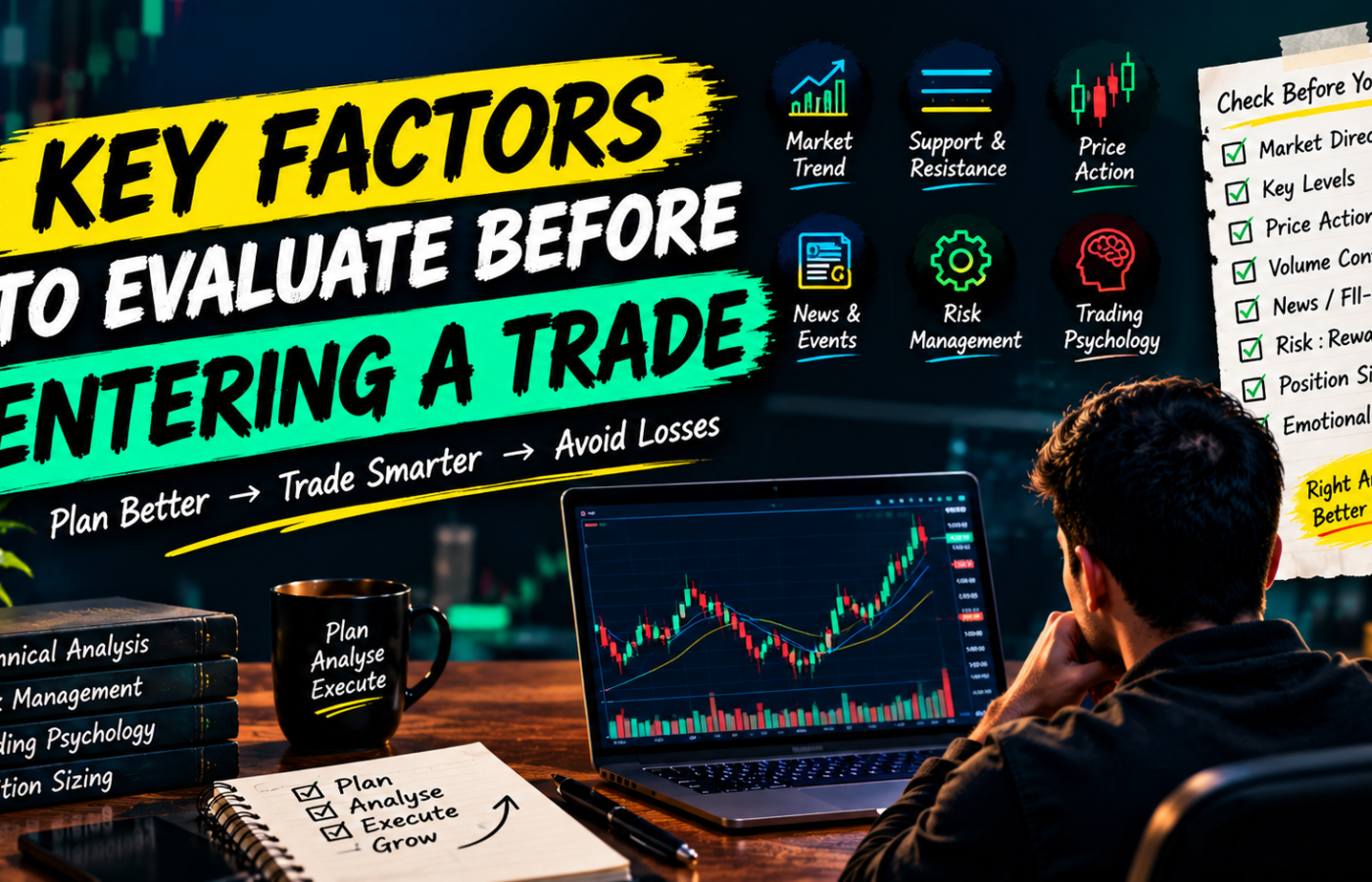
Key Factors to Evaluate Before Entering a Trade

A well-planned trade begins before you place an order. Taking time to assess the market, define your risk, and understand your reasons for entering can help you make more informed decisions. No checklist can guarantee a profitable outcome, but a consistent process may help you avoid impulsive trades.
1. Your reason for entering
Be clear about why the trade fits your strategy. Identify the market conditions or signals you’re relying on, and decide what would prove your idea wrong. If you can’t explain the trade simply, take more time to research it.
2. Entry and exit plan
Before entering, decide:
- The price or conditions that would prompt an entry
- Where you might exit if the trade moves against you
- Where you might take profit, if the trade goes your way
- How you will respond if market conditions change
A plan can support more consistent decision-making, but orders such as stop-losses may not always execute at the exact price you expect.
3. Potential risk and reward
Consider how much you could lose compared with the potential gain. The possible reward should make sense in relation to the risk you’re taking, but this comparison does not predict whether a trade will succeed. Avoid risking money you need for essential expenses.
4. Position size
Choose a position size that fits your account and risk limits. A trade that seems small in a large account may be significant in a smaller one. Account for the possibility of sudden price changes, gaps, and execution costs.
5. Market conditions and volatility
Prices can move quickly around economic announcements, company news, or unexpected events. Check whether current volatility suits your strategy and whether you understand the factors that may affect the asset. If conditions are unusually uncertain, waiting may be a reasonable choice.
6. Trading costs and liquidity
Spreads, commissions, financing charges, and other fees can affect the outcome—especially for frequent traders. Also consider liquidity: in less actively traded markets, it may be harder to enter or exit at the price you want.
7. Leverage and product risks
If a product uses leverage, understand how it can magnify both gains and losses. Review the product’s terms, margin requirements, and the possibility of losing more than you initially invested. Do not use leverage unless you fully understand the risks.
8. Your emotional state
Fear of missing out, frustration after a loss, or overconfidence after a win can influence decisions. Check whether the trade follows your rules or whether you’re reacting emotionally. If you feel rushed or upset, consider stepping away before acting.
A practical pre-trade checklist
Before placing a trade, ask yourself:
- Does this trade fit a strategy I understand?
- Have I defined my entry, exit, and risk?
- Can I afford the potential loss?
- Have I considered fees, liquidity, and volatility?
- Am I making this decision calmly?
Final thoughts
Evaluating a trade is about more than spotting a potential opportunity. A clear plan, realistic risk assessment, and awareness of costs and emotions can help you make more deliberate choices. Trading still involves the risk of loss, and no checklist or strategy can guarantee returns.
This article is for educational purposes only and is not personalized financial advice.