

How to Adjust an Iron Condor During Violent Market Swings

How to Adjust an Iron Condor During Violent Market Swings
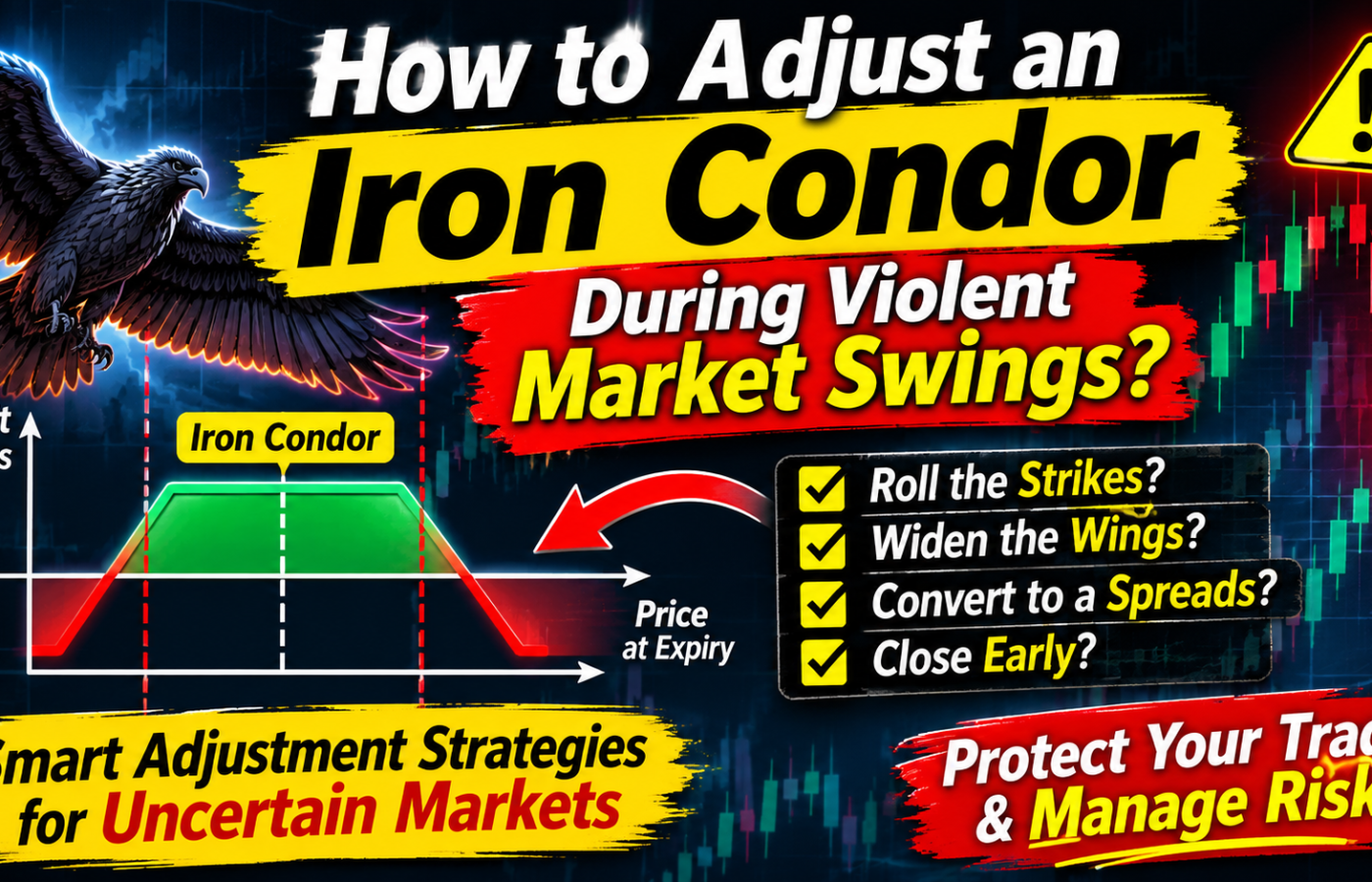
An Iron Condor can look like a comfortable options strategy when the market is moving sideways. But when Nifty suddenly makes a sharp move, that comfort can disappear very quickly.
A strong rally or sell-off can put one side of the Iron Condor under pressure. This is where many traders make emotional decisions—adjusting too early, adding unnecessary positions, or taking more risk just to avoid a loss.
The key to managing an Iron Condor during volatile markets is not to panic. It is to understand your risk, have a plan, and know when an adjustment actually makes sense.
Disclaimer: This article is for educational purposes only and should not be considered investment or trading advice. Options strategies involve risk, and traders should understand all potential losses before taking any position.
What Is an Iron Condor?
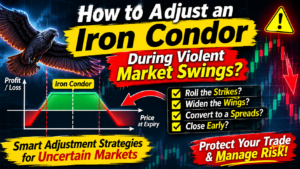
An Iron Condor is an options strategy that combines a Call spread and a Put spread.
It is generally used when a trader expects the underlying market, such as Nifty, to remain within a certain range.
The strategy typically has four option positions:
- A protective long Put
- A short Put
- A short Call
- A protective long Call
The position usually has limited potential profit and limited risk when structured correctly.
However, a sharp market move can change the risk profile quickly.
Why Violent Market Swings Are Dangerous
Markets do not always move slowly.
A major news event, global market reaction, or sudden increase in volatility can push Nifty sharply in one direction. When this happens, one side of the Iron Condor can come under significant pressure.
For example, if Nifty rallies strongly, the Call side may become the main concern. During a sharp decline, the Put side may face pressure instead.
The first step is not to immediately adjust the position.
The first step is to understand what has changed.
Ask yourself:
- Has price actually broken an important level?
- Is the move continuing with strong momentum?
- How much risk remains in the position?
- Has volatility increased?
- Is the position still within your original risk plan?
Adjustment Should Never Be an Emotional Reaction
One of the biggest mistakes in options trading is adjusting a position simply because the market moved against you for a few minutes.
Every adjustment can change the structure of the trade. It may reduce risk on one side while creating new risk somewhere else.
Before making any adjustment, have a clear reason.
A good adjustment plan should answer three questions:
- What problem am I trying to solve?
- How will this change reduce my overall risk?
- What new risks am I creating?
If you cannot answer these questions, it may be better to avoid making an unnecessary change.
Common Ways Traders Manage an Iron Condor
There is no single adjustment that works in every market situation. The right approach depends on the position, volatility, time remaining until expiry, and the trader’s risk tolerance.
Some traders may consider managing risk by:
Closing the Threatened Side
If one side of the position is under heavy pressure, a trader may decide to reduce exposure by closing some or all of that side.
This can reduce future risk, although it may also lock in a loss.
Reducing Position Size
Sometimes the simplest risk adjustment is to reduce the size of the overall position.
Traders often forget that they do not have to manage every position until expiry. Reducing exposure can be a valid way to control risk.
Using Pre-Defined Exit Rules
For many traders, the best adjustment plan starts before the trade is even entered.
A trader can decide in advance:
- The maximum acceptable loss.
- The price level that requires action.
- How much capital can be allocated to the trade.
This helps prevent emotional decisions when the market becomes volatile.
Avoid the Trap of Adding More Risk
When an Iron Condor starts losing money, some traders try to fix the problem by adding more positions.
This can make the strategy more complicated and increase the total risk.
More positions do not automatically mean better risk management.
A simple question can help:
Is this adjustment reducing my risk, or am I simply trying to recover the loss?
If the answer is recovery, emotions may be driving the decision.
Time to Expiry Matters
The number of days remaining until expiry can significantly affect how an Iron Condor behaves.
As expiry approaches, option premiums can change quickly. Gamma risk may also become more significant, especially when the underlying price moves close to a short strike.
This means an adjustment that looks reasonable several days before expiry may carry different risks close to expiry.
Always consider:
- Time remaining.
- Current volatility.
- Distance between price and your short strikes.
- Your maximum possible loss.
A Simple Risk Management Checklist
Before entering or adjusting an Iron Condor, consider these questions:
- Do I understand the maximum possible loss?
- What happens if Nifty makes a strong one-way move?
- Do I have a predefined exit plan?
- How much of my trading capital is at risk?
- Am I adjusting the position based on rules or emotions?
- Have I considered the impact of time and volatility?
Writing these rules down before entering a trade can make decision-making easier during volatile market conditions.
Final Thoughts
An Iron Condor is not a strategy that should be left completely unattended.
During calm markets, the position may appear easy to manage. But violent market swings can quickly test a trader’s discipline.
The goal of an adjustment should not be to guarantee a profit or eliminate every loss. Its purpose should be to manage risk according to a clear trading plan.
Sometimes the best decision is to adjust. Sometimes reducing exposure or exiting the trade is the better choice.
The most important lesson is simple: never let one options position become so large that a sudden market move can seriously damage your trading capital.
A good options trader is not someone who never faces a losing position. It is someone who understands the risk before entering and knows how to respond without panic when the market does something unexpected.