

Option Decay Explained: How Time Can Reduce Your NIFTY Option Profits

Option Decay in Action: Why a Good NIFTY Move Does Not Always Mean Big Option Profits
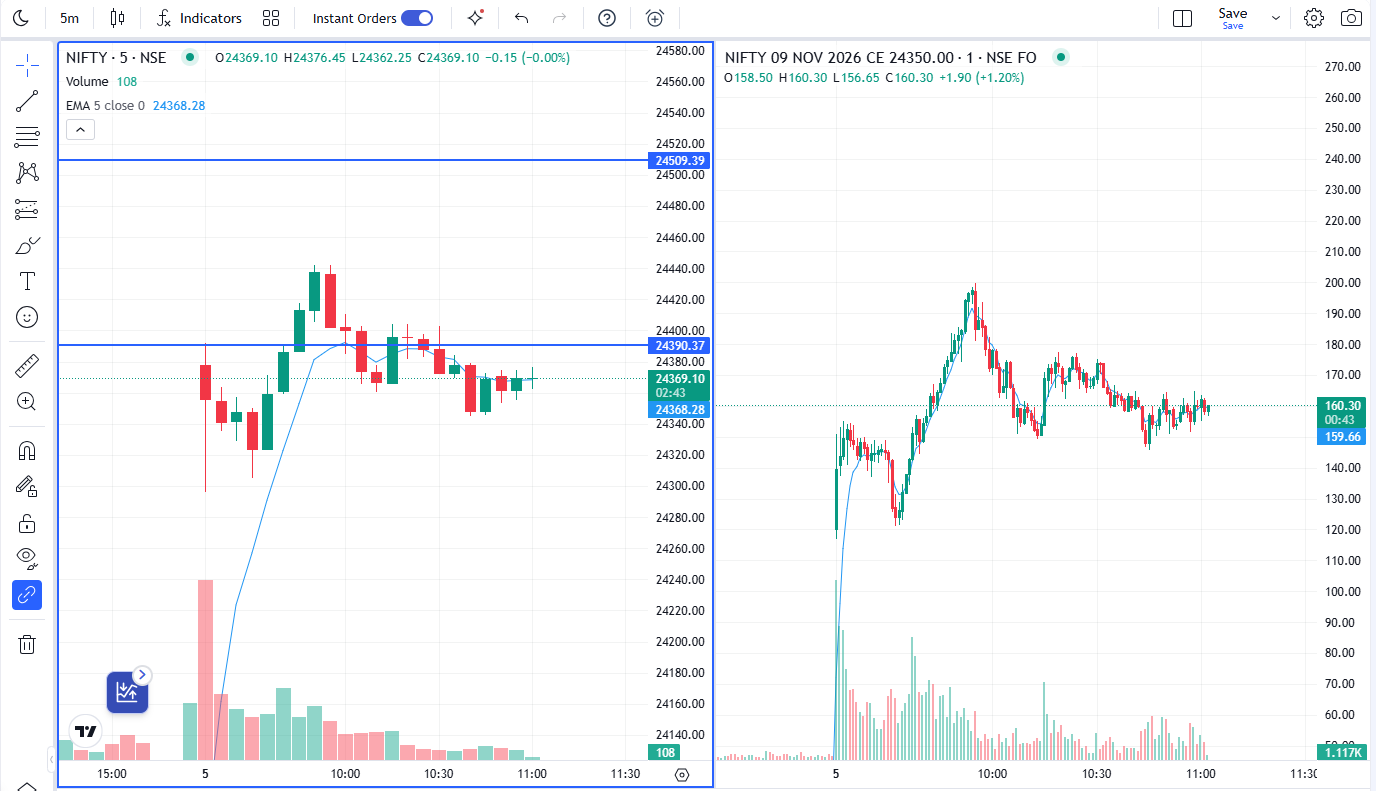
The NIFTY chart shows a strong lesson for option traders: a correct market view can still produce disappointing results if you enter at the wrong time or hold for too long.
In this setup, NIFTY moved higher after the opening volatility, and the 24350 CE premium also made a sharp move upward. The option price climbed from lower levels and reached a strong high near the early part of the session.
But what happened next is where option decay becomes important.
After the sharp rally, NIFTY started moving sideways and lost momentum. The CE premium also fell from its high and then remained around the ₹160 zone, even though the market did not immediately see a major collapse.
Why Did the Option Premium Fall?
This is the reality of option buying. An option premium is affected by more than just market direction.
When the market slows down, three things can hurt option buyers:
- Time decay (Theta) keeps reducing the option’s value.
- A lack of strong momentum can prevent the premium from moving higher.
- After a sharp move, profit booking can quickly pull the premium back.
The chart clearly shows that the best opportunity came during the momentum phase. Traders who entered early and booked profits near the strong upward move had a very different experience from those who entered late and waited for another rally.
The Lesson for Option Traders
Don’t just chase a green candle. Watch the momentum, timing and risk.
Option buying works best when the market moves quickly in your direction. Once the move slows down and the market enters consolidation, time can start working against the buyer.
A profitable option trade is not always about predicting where NIFTY will go. Sometimes, it is about understanding when the move is happening—and knowing when to exit.
Remember: In option trading, waiting too long can be expensive.
Disclaimer: This article is for educational purposes only and should not be considered investment or trading advice.