

Important Factors to Consider Before Exiting a Trade

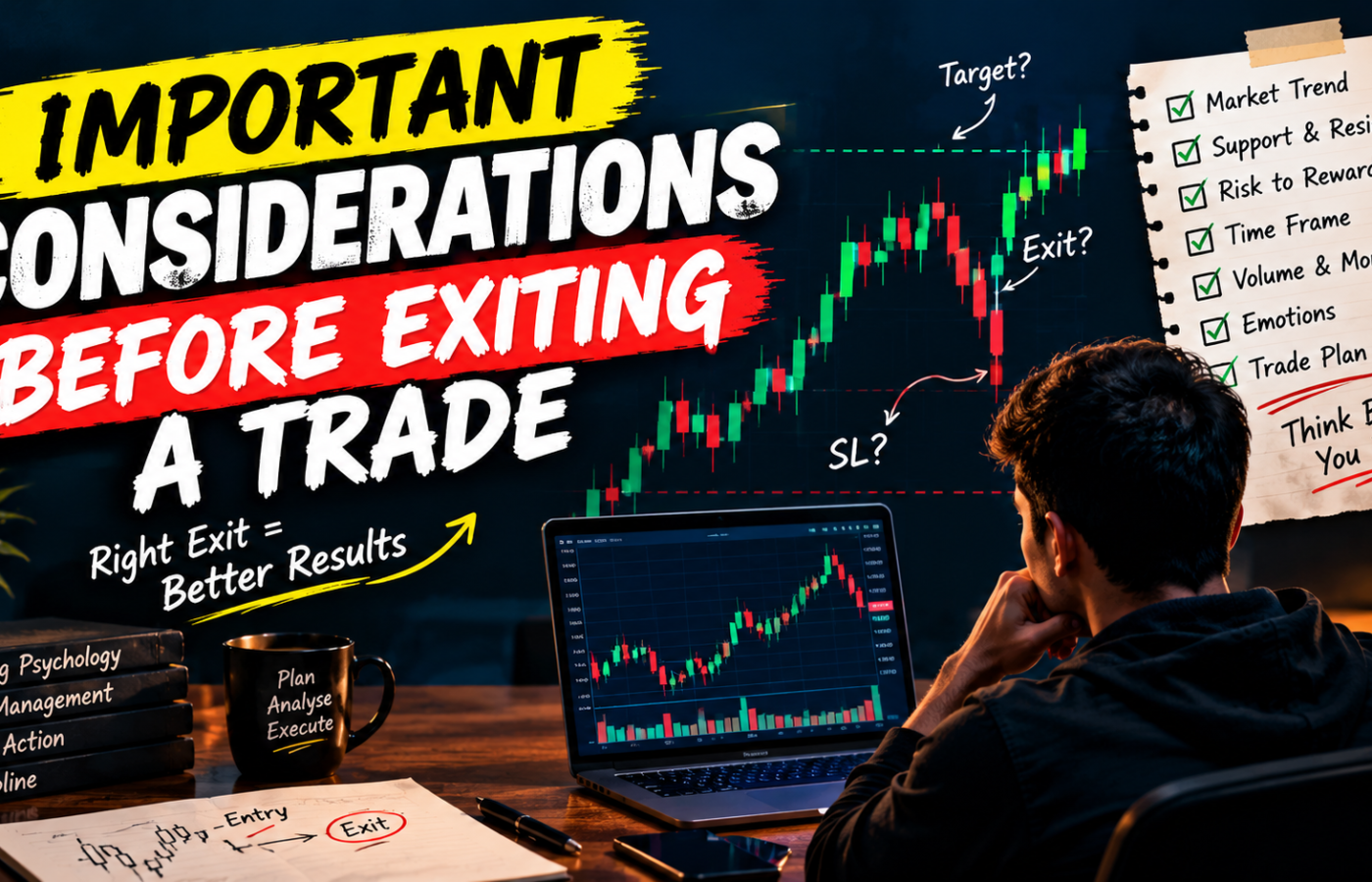
Exiting a trade is an important part of your trading plan. Decisions made in the heat of the moment—whether from fear, frustration, or excitement—can lead to outcomes that don’t match your original strategy. Before closing a position, review your plan, the current market conditions, and the risk involved. No exit strategy can guarantee a profit or prevent all losses.
1. Revisit your original plan
Check why you entered the trade and what conditions you identified for exiting. Has your target been reached? Has the reason for entering changed? Following a clear plan can help you avoid making decisions based solely on short-term price movements.
2. Review your risk limits
Consider how much of your account is still exposed to the trade. If the position has moved against you, avoid increasing your risk just to delay a loss. If it has moved in your favor, decide whether continuing to hold still fits your plan and risk tolerance.
3. Check for changes in market conditions
New information, unexpected news, or increased volatility may affect your original trade idea. Review relevant developments and consider whether they change your assessment. Be cautious about reacting to headlines without understanding their potential impact.
4. Consider your exit options
Depending on the market and product, you may be able to close the entire position or reduce it in stages. Each approach has trade-offs, and partial exits may add complexity or costs. Make sure you understand how your order type works and how it may behave in fast-moving markets.
5. Account for costs and execution
Spreads, commissions, financing charges, and other fees can affect your final result. In volatile or less liquid markets, an order may not execute at the price you expect. Review the relevant costs and execution risks before placing an exit order.
6. Avoid emotional decisions
Fear of losing a potential gain, reluctance to accept a loss, or a desire to recover money quickly can cloud judgment. Pause and ask whether your decision follows your strategy. If you feel pressured or upset, stepping away briefly may help you think more clearly.
7. Learn from the outcome
After closing the trade, record the reason for your exit, whether you followed your plan, and what you learned. Review this information over time to identify habits and improve your decision-making. A single winning or losing trade does not, by itself, prove that a strategy is effective.
Before exiting, ask yourself
- Does this decision align with my trading plan?
- Has the reason for entering the trade changed?
- Am I comfortable with the remaining risk?
- Have I considered costs, liquidity, and order execution?
- Am I acting on a clear reason rather than emotion?
Final thoughts
A thoughtful exit starts with a plan and a realistic view of risk. Review your original strategy, assess current conditions, and avoid making rushed decisions—while remembering that trades can result in losses, even when carefully planned.
This article is for educational purposes only and is not personalized financial advice. Trading involves risk, including the possible loss of capital.